Stay up to date with our events

AI4ALL Blog

AI Expertise vs. AI Literacy: What's the Difference?

You don’t need to be an AI expert to benefit from AI. You need AI literacy. Here’s the difference, the skills that matter, and how to start building them today.

Written by Carla Roman

AI4ALL facilitator helping a participant on a laptop during a hands-on workshop

As AI embeds itself into work, school, and your personal life, becoming comfortable with the technology grows increasingly critical. As technology continues evolving at lightning speed, AI tools can optimize your time and skills so you can slow down for the moments in life that matter.

But a common misconception is that you need to be an AI expert to benefit from the technology. You don’t. What you do need is AI literacy.

In this post, we explain the difference between AI literacy and AI expertise, the core skills that make up AI literacy, how it helps you now and in the future, and offer resources to help you on your AI literacy journey.

Core Differences: AI Expertise vs. AI Literacy

Think of AI expertise and literacy through the lens of a car. A mechanic can take an engine apart and diagnose malfunctions, while a driver just has to understand the rules of the road, recognize when something sounds wrong, and get where they need to go safely. We need both, and unless you aim to be a mechanic, you need only be a good driver. AI works the same way.

AI Expertise: the mechanic

If we continue with the analogy, consider AI experts as the car mechanics. They build the code, prepare the technology, and test the models. They can diagnose any bugs and optimize the systems. Their work answers the question: “How do I build it, and how can I fix it?”

AI Literacy: the driver

Those with AI literacy skills are the responsible drivers of today. With AI literacy you know which tasks to give an AI tool, spot answers that sound confident but are wrong, and you can think critically about how you leverage AI when dealing with sensitive data. No coding is required. AI literacy answers the question: “How can I use it, where can I use it, when should I question it?”

Employers increasingly expect this kind of fluency from everyone, not just their tech teams. A company can buy the best AI tools available, but those tools only pay off when the people using them know how to check the results and use them responsibly.

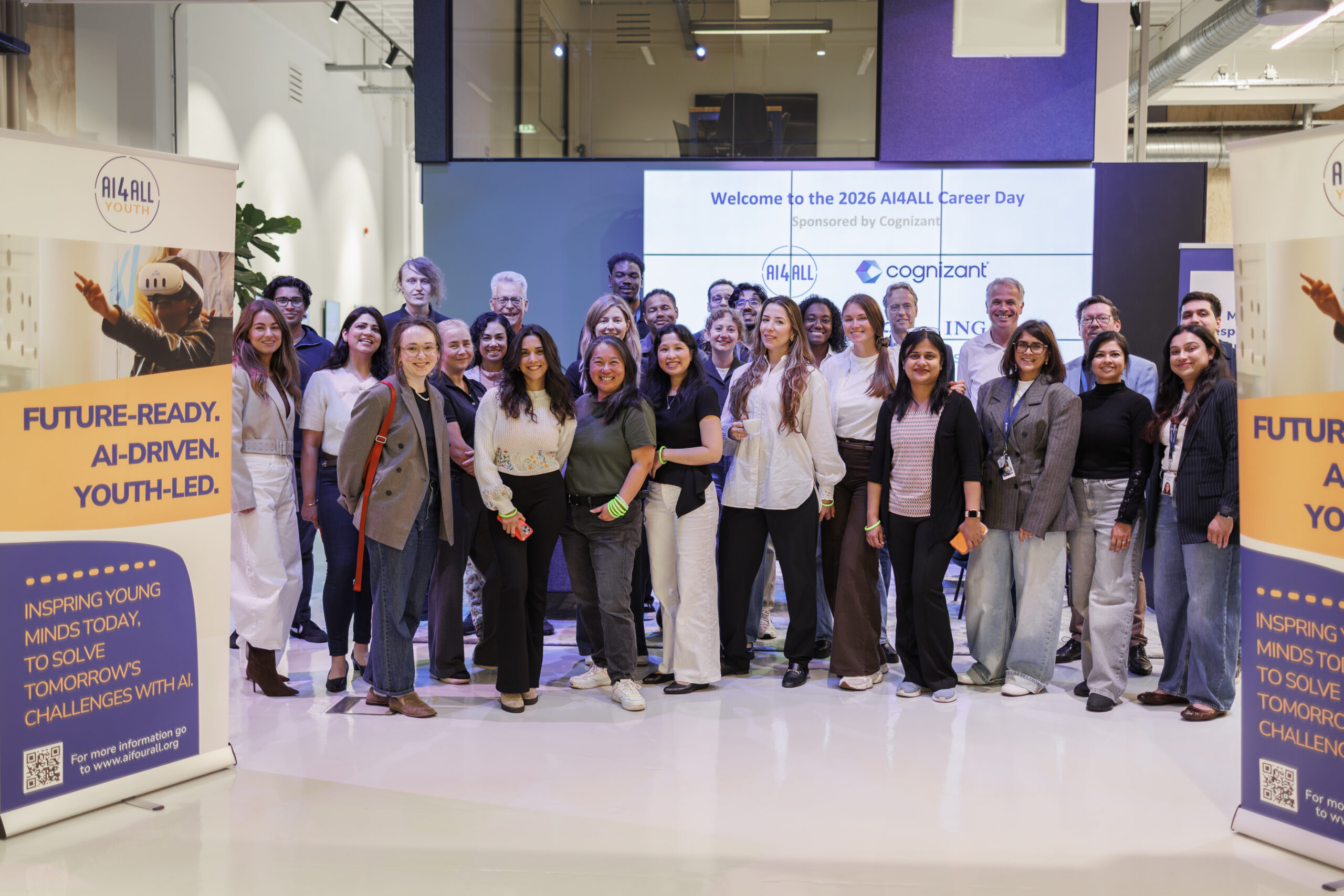
Group of AI4ALL Youth Career Day 2026 participants and volunteers posing together in front of a welcome screen

What AI Literacy Includes

As AI in the workforce grows, governments are becoming proactive about how AI is implemented. For example, under Article 4 of the EU Artificial Intelligence Act, EU organizations that deploy AI are required to build the AI literacy of their staff. This includes providing the understanding and knowledge needed to use AI safely, recognizing the benefits and limitations of the AI systems being deployed, and identifying the risks, biases, and harms associated with AI tools.

Whether at work, school, or in your daily life, AI literacy will optimize your time and enhance your career opportunities. Below we break down four key categories you should aim to understand to build your AI literacy skills.

Engaged audience raising hands during a session at the AI4ALL Summit

AI Literacy: The Skills You Need

Four areas to understand as you build your AI literacy. No coding required.

01

Know what AI is

You don’t need to understand the code, but it helps to understand the basics. Most AI tools learn patterns from huge amounts of data and use those patterns to make predictions, whether that means guessing the next word in a sentence or recommending your next song. Knowing this explains both why AI is so useful and why it sometimes gets things wrong.

02

How to use AI

AI literacy is about developing the practical skills required for you to use AI. It means knowing how to give an AI platform clear prompts, refining your prompt when the answer misses, and matching the right tool to the task. The best way to build this skill is to begin using AI for your tasks and pay attention to what happens.

03

Question and review

AI can produce answers that are polished and confident but inaccurate, outdated, or made up. A literate user double-checks facts and where information came from, and treats AI output as a draft, not a final answer.

04

Critical reflection

AI systems are built by people and learn from data selected by people, so they can be flawed and repeat human biases. Using AI critically means thinking about who is represented in results and who can be harmed by them, assessing the risk when sharing your own and others’ private information, and questioning when it is safe to use AI for your work tasks.

Leveraging AI Today and in the Future

Today

AI literacy will help you work faster and smarter. You can hand off routine tasks like drafting, summarizing, and organizing, and spend more time on work that needs your judgment and creativity. You know when not to trust an AI result, when AI can create data privacy risks, and when AI can automate tasks.

Tomorrow

As AI spreads into more roles, AI literacy will become a baseline expectation, just as computer and internet skills did. Some governments already treat it that way: in the European Union, the AI Act requires organizations that build or use AI to develop AI literacy among their staff. People with AI literacy can adapt as tools change, help shape how AI is used in their workplaces and communities, and push for AI that works fairly for everyone.

Speaker presenting to young people during an AI session at AI4ALL Youth Career Day 2026

Building AI Literacy Skills

You don’t need a degree or a course to get started. The best way to build AI literacy is to use AI.

One tool. One task.

Choose an AI tool you already have access to and give it a task from your week, like summarizing an article, drafting an email, or planning a project. Look closely at the results. Is it accurate? Did it answer your question or do what you prompted? What did it miss? How could you ask more clearly next time?

Repeat this every week, and you’ll quickly learn where AI helps and where it falls short.

Go Further with AI4ALL

When you’re ready to deepen your understanding, AI4ALL’s programs help you build the knowledge and confidence to use AI thoughtfully and shape its future. Whether through our meetups or masterclasses, AI4ALL aims to support everyone’s journey to AI literacy.