AI4ALL Blog
Machine learning, deep learning, training data, agentic AI and multimodal AI in plain language: how AI learns, what it learns from, and where it’s heading next.
Written by Berna Syuleymanoglu
Last time, we covered the basics: AI vs. Gen AI, LLMs, prompts, hallucinations, model vs. app. As promised, this time we’re going one layer deeper: the nuts and bolts behind how these tools actually learn, and a couple of terms for where it’s all heading next.
Here’s the thing: this isn’t about turning you into an engineer. Knowing a little about how these systems actually work is the difference between nodding along when someone brings it up, and genuinely being part of the conversation. It’s the difference between AI feeling like something happening to you, and something you’ve actually got a handle on.
That’s basically our whole mission at AI4ALL: creating space for people who feel like this space is moving too fast to catch up, and showing them it’s genuinely not as complicated as it looks. So, same deal as last time: no computer science degree required, just five minutes and a simple breakdown. Let’s get into it.
Machine Learning is a type of AI that improves by studying a large amount of data instead of following rules someone typed in by hand.
While traditional programming follows a strict rulebook (“if X, then Y”), machine learning figures out the math and logic in between based on the given examples.
Think of a spam filter: nobody wrote a rule for every possible scam email. The system learned what spam tends to look like by studying a huge pile of examples, then applied that pattern to your inbox.
And just as this example shows, machine learning is already quietly running in the background of your everyday life. Your streaming recommendations, your banking app flagging a suspicious charge, your phone’s autocorrect: all machine learning, working away without you ever thinking about it.
Deep Learning is a more advanced kind of machine learning that teaches computers to process data and recognize patterns, loosely inspired by how neurons connect in the brain.
It uses multi-layered “neural networks” to handle raw, messy data like images, speech, and free-form text. More layers means it can pick up on far more subtle, complex patterns than older machine learning methods could.
It’s deep learning that made today’s AI boom possible. It’s the reason tools went from clunky and robotic to genuinely fluent.
Training data is the massive pile of text, images, or other information a model or AI studied before it ever responded to you.
Think of training data like teaching a toddler what a dog is. You don’t hand a 2-year-old a textbook on animal biology. Instead, you point out a fluffy animal and say, “Look, a doggie!”
Then you show them another dog, and another. After seeing a hundred different dogs, big ones, small ones, brown ones, and white ones, the child’s brain automatically figures out the pattern: dogs have four legs, fur, and a wagging tail.
The hundred different dogs you pointed out become the training data. The next day, when a totally new dog walks by, the toddler looks at it and yells, “Doggie!” because they recognized the pattern.
AI learns the exact same way. You show it thousands of examples until it finally gets the idea.
Everything so far has been about AI responding to you. Agentic AI is the shift toward AI that can take action: breaking a goal into steps, using tools, and carrying out a task across multiple steps with minimal hand-holding.
The difference at a glance: a regular chatbot will tell you how to book a flight. An agentic AI can actually go check prices, compare options, and carry out steps on your behalf, checking in only when it actually needs you.
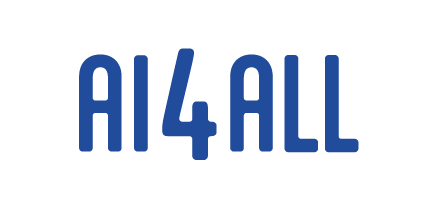
Curious what that actually looks like in practice? Check out our interview with our co-founder Jana Wilhelmus on how she uses Claude to delegate some of her tasks.
“Modal” refers to a type of input or output: text, image, audio, video. A multimodal AI can see, hear, read, and understand multiple types of information at the same time, rather than being limited to just reading and writing words.
This is what lets you show an AI tool a photo and ask what’s wrong with your houseplant, or hand it a voice memo and get back a written summary.
That’s the full picture: machine learning and deep learning explain how these tools get smart, training data explains what they learned from, and agentic AI and multimodal AI point to where things are headed next: less typing and waiting, more doing and showing.
If you want to discover more stories, tips, and insights from across our network, head over to our blog and check out AI4ALL’s website.
Check out AI4ALL’s upcoming Meetups, the Entrepreneur Program, Masterclasses, and the Mentor Program. Join our movement shaping AI’s future together.